Playing Hide and Seek Across the Cosmos: The Case for a Universe Full of Quiet Neighbors
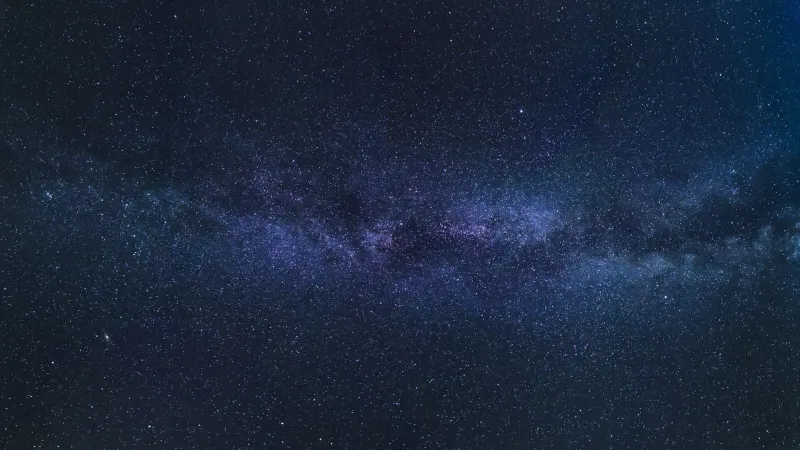
We've been scanning the skies for decades, pointing increasingly powerful telescopes and radio dishes at the stars, and getting back — nothing. Well, almost nothing. The silence has always been the puzzle. But what if we've been framing it wrong this whole time? What if the universe isn't a ghost town? What if it's more like a neighborhood where everyone's home, the lights are off, and nobody's answering the door on purpose?
That's the uncomfortable core of a theory that's been quietly gaining traction among astrobiologists, theoretical physicists, and a few philosophers brave enough to wade into the deep end. It's called the Zoo Hypothesis, and once it gets in your head, it's pretty hard to shake.
The Zoo Hypothesis, Explained Without the Jargon
First proposed by radio astronomer John Ball back in 1973, the Zoo Hypothesis flips the Fermi Paradox on its head. Instead of asking why we haven't detected alien life, it asks: what if they've detected us — and made a deliberate choice to stay quiet?
The idea is roughly this. Imagine a civilization that's had a million-year head start on humanity. They've solved energy, colonized multiple star systems, and developed technologies we can't even conceptualize yet. At some point, a species that advanced would almost certainly encounter younger, less developed civilizations. And they might — for reasons of ethics, curiosity, self-preservation, or something we don't have a word for — decide to leave those civilizations alone.
Sound familiar? It should. We do a version of this ourselves. Wildlife preserves, non-contact policies with isolated indigenous tribes, even our own debates about how to handle first contact scenarios — humans already understand the logic of deliberate non-interference. We just haven't applied that thinking to the cosmic scale.
Why Silence Might Be the Smartest Move in the Galaxy
Here's where it gets really interesting. The Zoo Hypothesis isn't the only model built around intentional concealment. There's a related concept sometimes called the Dark Forest Theory, popularized in Liu Cixin's science fiction trilogy but also explored seriously in academic circles. The premise is grimmer: the universe is silent because any civilization smart enough to survive long enough figures out that broadcasting your location is an existential risk.
Think of it like this. You don't know who else is out there. You don't know their values, their resource needs, or their threat threshold. In a universe where the distances are so vast that any conflict plays out over geological timescales, the safest strategy might simply be to go dark and stay dark. Don't transmit. Don't respond. Don't let anyone know you exist.
If that logic holds, then the universe could be absolutely teeming with life — and we'd never know, because every surviving civilization has independently arrived at the same conclusion: silence is survival.
That reframes our own SETI efforts in a slightly uncomfortable light. We've been broadcasting our presence for over a century through radio waves, television signals, and deliberate transmissions like the Arecibo Message. From a Dark Forest perspective, we've been the noisiest kid on the block, blissfully unaware that the quiet ones aren't absent — they're watching.
The Ethical Zoo Keeper Problem
Back to the Zoo Hypothesis, because it raises a question that's philosophically thornier than the Dark Forest scenario. If advanced civilizations are intentionally leaving us alone out of something like ethical consideration, that implies a level of coordinated restraint across potentially thousands of species. How would that even work?
Some researchers have proposed what's sometimes called a Galactic Club model — the idea that sufficiently advanced civilizations have established shared protocols around non-interference with developing species. Kind of like a cosmic version of the Prime Directive from Star Trek, except real and enforced not by a fictional federation but by the practical wisdom that comes with age and experience.
The tricky part is that this model requires a remarkable degree of consensus among beings that may have nothing biologically or culturally in common. It assumes that the ethical calculus of non-interference is so obvious that it transcends the specifics of any individual civilization's values. That's a big assumption. But it's not an impossible one. Convergent evolution happens in biology all the time — eyes, wings, and fins evolved independently across wildly different lineages because they're just good solutions to common problems. Maybe non-interference is the convergent evolution of ethics at civilizational scale.
What This Means for How We Think About Contact
If any version of these theories is even partially correct, it reshapes the whole conversation about what we're actually looking for when we scan the stars. We've largely been searching for signals that look like ours — radio waves, laser pulses, the kinds of transmissions a civilization at roughly our technological level might produce. But a civilization that's gone deliberately quiet wouldn't be using any of those.
They might be communicating through channels we haven't imagined yet. Neutrino pulses. Gravitational wave modulation. Something embedded in the background noise of the universe that we'd need a completely different conceptual framework just to recognize as communication. The absence of a signal we understand isn't the same as the absence of a signal.
There's also the uncomfortable possibility that we're being observed right now, and the observation itself is the point. Some versions of the Zoo Hypothesis suggest that contact — if it ever comes — would be initiated by the watchers, not by us, and only when we've reached some threshold of development or behavior that they've decided qualifies us for introduction. What that threshold looks like is anyone's guess. Maybe it's technological. Maybe it's ethical. Maybe it's something we don't have a category for yet.
The Humbling Math of Being the New Kid
Here's the part that tends to land hardest when you really sit with it. The universe is about 13.8 billion years old. Earth is roughly 4.5 billion years old. Modern humans have been around for maybe 300,000 years, and we've had radio technology for about 150 of those. On a cosmic timeline, we are extraordinarily new.
If life can emerge anywhere with the right conditions, and if the universe has been producing those conditions for billions of years before our solar system even formed, then statistically speaking, we are almost certainly one of the younger civilizations around. Not the youngest, maybe. But nowhere near the oldest.
That means whatever's out there has had time — enormous, incomprehensible amounts of time — to develop strategies, philosophies, and technologies that we can't fully grasp. The silence we hear might not be emptiness. It might be patience.
And maybe, if we're lucky, it's something closer to kindness — a universe full of older, quieter civilizations waiting to see what we do next before they decide whether to say hello.
No pressure, humanity. No pressure at all.