Speed Has a Price Tag We Never Agreed To Pay
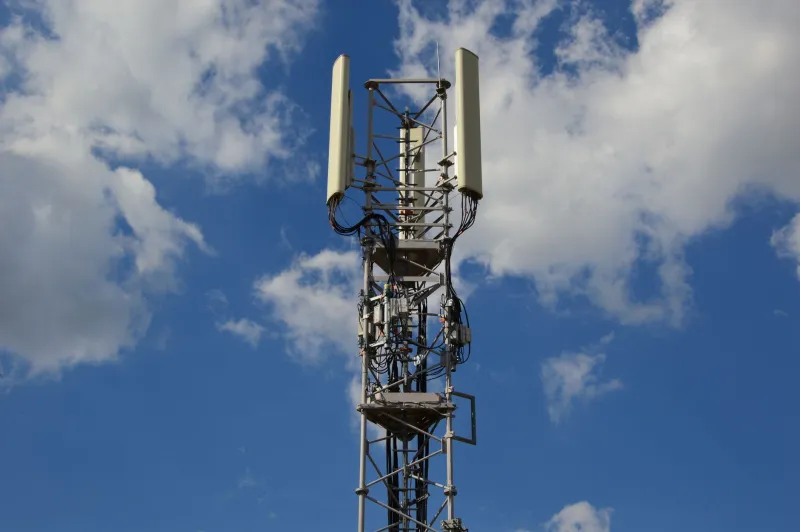
There's a version of the future where everyone on Earth has instant, uninterrupted access to the internet — from the subway tunnels under Manhattan to the dirt roads outside Bozeman, Montana. That version is arriving faster than most people expected. And tucked inside it, almost invisible, is a trade we never formally agreed to make.
We gave away the map to get the road.
The Infrastructure We Celebrate Is Also the Infrastructure That Watches
When Starlink started beaming internet access to rural communities that had been ignored by traditional ISPs for decades, the headlines were almost universally warm. When 5G towers started rolling out across American cities, the conversation was about speed — milliseconds shaved off latency, entire movies downloading before you blinked. What didn't make the front page was the architectural reality sitting underneath all of it.
Modern high-speed connectivity infrastructure isn't just a delivery system. It's a data collection apparatus running in parallel. The same dense antenna networks that make 5G fast enough to power autonomous vehicles and remote surgery are also capable of tracking device location with a precision that would have seemed dystopian to anyone reading a William Gibson novel in the '90s. Satellite internet constellations covering the globe require ground station networks and traffic routing systems that, by their very nature, create extraordinarily detailed logs of who is communicating with whom, when, and from where.
None of this is a secret, exactly. It's just buried. It's in the terms of service. It's in the regulatory filings. It's in the architecture diagrams that almost nobody outside of a network engineering department ever looks at.
Faster Isn't a Neutral Word
Here's the thing about speed as a value proposition: it's almost impossible to argue against. Nobody campaigns for slower internet. Nobody runs for office on a platform of worse connectivity. Speed is clean, it's positive, it maps neatly onto the American cultural obsession with efficiency and progress. It's the kind of word that shuts down skepticism before skepticism even gets a sentence in.
But speed, in the context of data transmission, has always been a proxy for something else. When we say we want faster internet, we mean we want friction removed from our lives. We want the gap between wanting something and having it to shrink toward zero. That's a deeply human desire, and there's nothing wrong with it in isolation. The problem is that the systems built to eliminate that friction have a commercial incentive to understand us — our habits, our routines, our relationships, our locations — as thoroughly as possible. Friction removal and behavioral profiling are, it turns out, almost the same engineering problem.
The faster the network, the more granular the data. The more granular the data, the more complete the picture. The more complete the picture, the more valuable the infrastructure becomes to parties whose interests may not align with yours.
The Satellite Angle Nobody's Talking About Enough
Low Earth orbit is getting crowded. SpaceX, Amazon, OneWeb, and a growing list of competitors are racing to build out constellations that will eventually blanket virtually every square mile of the planet in connectivity. From a pure access standpoint, this is genuinely remarkable — billions of people currently underserved by terrestrial infrastructure could get online within the next decade.
But here's the part that deserves more scrutiny than it's getting: when your internet traffic routes through a private satellite constellation, you are placing enormous trust in the company operating that constellation. The regulatory framework governing what those companies can do with traffic metadata, behavioral data, and location information is, to put it charitably, a work in progress. The FCC has authority over some of it. International bodies have jurisdiction over pieces of it. But there are meaningful gaps, and the pace of constellation deployment is outrunning the pace of regulatory clarity by a significant margin.
We are, in effect, building the surveillance layer before we've figured out the rules governing it. That's not a conspiracy — it's just the way technology development tends to work when the commercial incentives are large enough and the public attention is focused on the exciting part of the story rather than the structural part.
What We Actually Mean When We Say Autonomy
The word autonomy gets thrown around a lot in tech policy conversations, and it can start to feel abstract. So let's make it concrete. Autonomy, in this context, means the practical ability to move through the world — physically and digitally — without your movements, associations, and decisions being continuously logged, analyzed, and potentially used against your interests.
That ability is eroding. Not dramatically, not all at once, but steadily and measurably. The coverage maps that 5G carriers publish aren't just advertising — they're documentation of how thoroughly the monitoring layer has expanded. Every new satellite launched into low Earth orbit extends that layer further. And each incremental expansion is sold to us not as a surveillance expansion but as a connectivity improvement, because that's what it genuinely is, simultaneously. The two things are not separable. That's the architecture.
This isn't an argument for slower internet or less satellite coverage. Access to fast, reliable connectivity is a real social good and it would be intellectually dishonest to pretend otherwise. But it is an argument for demanding that the conversation about speed includes an honest accounting of what comes bundled with it.
The Bargain Deserves a Renegotiation
We are not powerless here, even if it sometimes feels that way. Legislative frameworks like a genuinely comprehensive federal privacy law — something the US still doesn't have in the way that Europe has GDPR — would change the incentive structure for the companies building this infrastructure. Meaningful data minimization requirements, enforceable limits on traffic metadata retention, and real transparency obligations would make the bargain more legible without dismantling the connectivity gains.
The technology itself isn't the villain. The architecture of consent around it is the problem. We've been asked to trade something significant for something genuinely valuable, and the trade has been structured so that we barely notice it happening.
Out here on the frontier of what connectivity can become — a world where a fishing boat off the coast of Alaska has the same internet access as a Manhattan office building, where a student in rural Mississippi can attend the same virtual classroom as a student in San Francisco — the stakes are high enough that we should be paying attention to all of it. The speed and the shadow it casts.
Faster is coming whether we're ready or not. The question is whether we insist on knowing exactly what we're paying for it.