Signal Lost: The Strange Emptiness at the Center of a Fully Connected Life
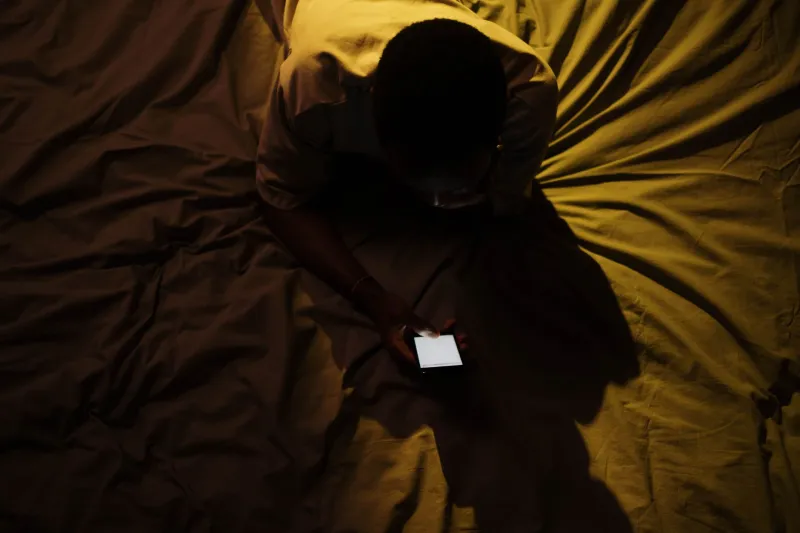
Here's a number worth sitting with for a second: the average American now has access to roughly 5,000 social connections across various platforms. Five thousand. That's more people than lived in most medieval villages. And yet, according to a 2023 Gallup survey, nearly one in five Americans reports feeling lonely "a lot of the day." The Surgeon General called it an epidemic. Researchers started comparing the health risks of chronic loneliness to smoking fifteen cigarettes a day.
Something isn't adding up.
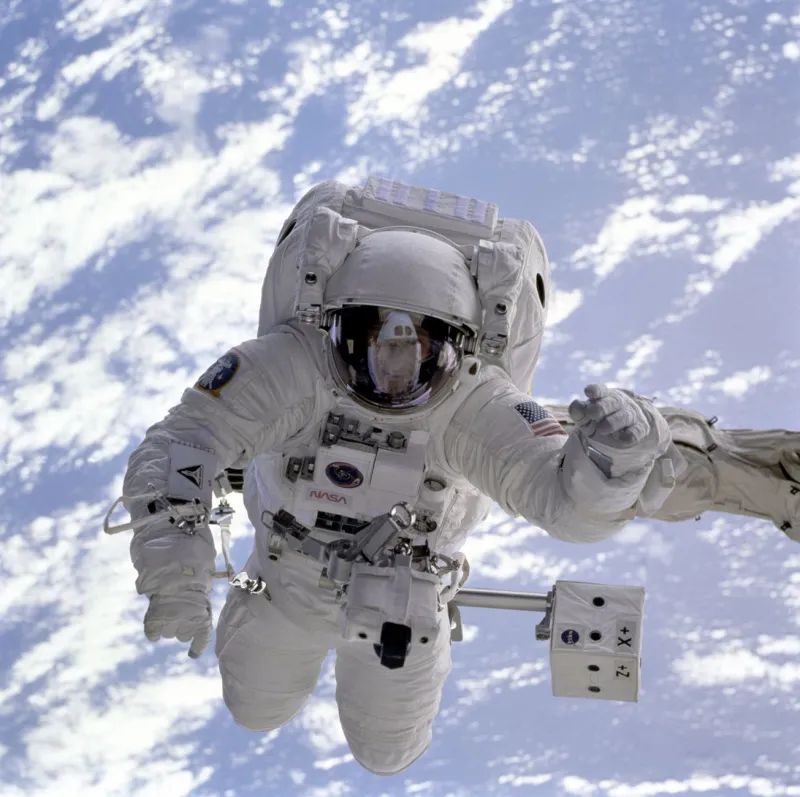
We've wired the entire planet together. We've built pipes and protocols and platforms so sophisticated that a teenager in Tulsa can have a real-time conversation with someone in Tokyo before breakfast. And the result, somehow, is a civilization that feels increasingly hollow at its emotional core. It's one of the great paradoxes of the digital age — and honestly, if you spend any time thinking about humanity's place in the cosmos, it should sound pretty familiar.
The Cosmos Called. It Wasn't Really There.
There's a concept in space exploration called the Fermi Paradox — the unsettling observation that a universe this old and this vast should, statistically speaking, be absolutely crawling with intelligent life. And yet we hear nothing. We scan the skies, we point our best instruments at billions of stars, and the universe hands us back silence. Not the comfortable silence of an empty room. The unnerving silence of a room that should be full.
Our digital lives have started to feel a lot like that.
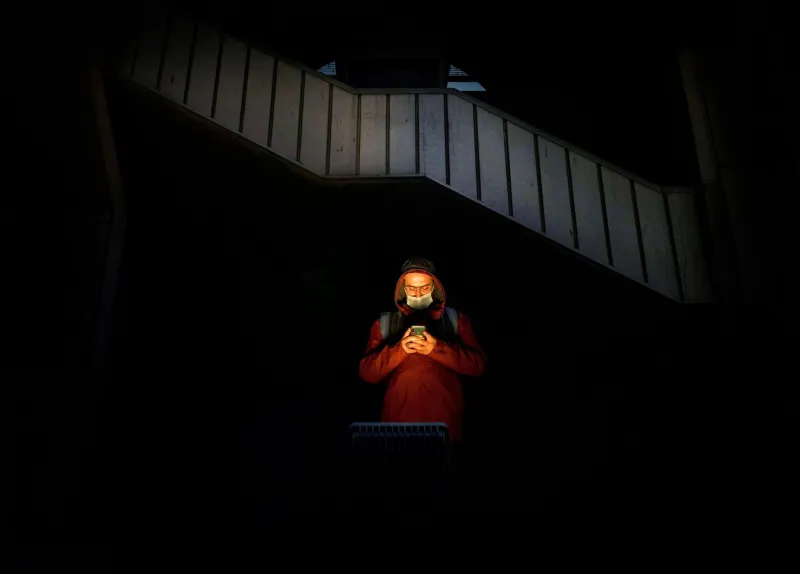
The infrastructure for connection is everywhere. Notifications ping constantly. Feeds refresh endlessly. Group chats stay perpetually active. By every external measure, we are surrounded. But surrounding isn't the same as reaching. And that's where the neuroscience gets genuinely interesting — and a little grim.
Human brains didn't evolve to process 5,000 relationships. They evolved, more or less, for Dunbar's Number — the cognitive limit, proposed by British anthropologist Robin Dunbar, of roughly 150 stable social relationships at a time. Go beyond that, and the brain starts processing connections more like data than people. Faces become icons. Messages become noise. The intimacy circuitry that evolved over hundreds of thousands of years starts misfiring in an environment it was never designed for.
What we've built is a universe of signals. What we're starving for is contact.
Bandwidth Is Not the Same as Depth
Social media platforms, to their credit, solved a genuinely hard engineering problem. Keeping billions of people connected in real time, at scale, with low latency — that's an extraordinary technical achievement. The problem is that the engineers optimized for engagement, not for the kind of slow, reciprocal, sometimes uncomfortable exchange that actually builds trust between people.
Likes are fast. Vulnerability is slow. Algorithms love the former and are largely indifferent to the latter.
Researchers at the University of Pennsylvania ran a controlled study a few years back where they limited participants to 30 minutes of social media use per day. After three weeks, those participants reported significantly lower levels of loneliness and depression compared to the control group. Less contact, more connection. The paradox held up under lab conditions.
This isn't an argument for going off the grid. It's an argument for taking seriously what "connection" actually means — what it requires, what it costs, and what no platform has yet figured out how to automate.
Genuine connection involves misreading someone's tone and having to repair it. It involves showing up when it's inconvenient. It involves the neurological cocktail of oxytocin and shared physical presence that a notification simply cannot replicate. We've built extraordinarily efficient substitutes for those things. And substitutes, no matter how convincing, eventually reveal themselves.
The Vastness Problem
Here's where it gets philosophical — and where Big Spaceship's whole reason for existing starts to feel relevant.
One of the stranger features of deep space is that its scale actively works against meaning. The universe is so incomprehensibly large that individual events — stars being born, planets forming, civilizations rising — get statistically swallowed. The cosmos doesn't register significance. It just expands.
Our attention economy has started to function the same way. There are so many voices, so many posts, so many moments competing for relevance, that individual human experiences lose their gravitational pull. Your grief, your joy, your carefully considered opinion — they enter the feed and the feed absorbs them without friction. The vastness doesn't reject you. It just makes you invisible.
That experience — of broadcasting into a void that technically receives your signal but doesn't meaningfully respond — is psychologically corrosive in ways we're still mapping. Some researchers describe it as "ambient awareness without intimacy." You know what's happening in a hundred people's lives without actually knowing any of them. You are observed without being seen.
What We're Actually Looking For
The loneliness paradox isn't really about technology failing us. It's about technology succeeding at the wrong thing.
We asked our platforms to connect us, and they did — at scale, efficiently, globally. What we actually needed was something closer to what astronauts describe after long missions: the specific, irreplaceable quality of being genuinely known by another person. Not followed. Not liked. Known.
That kind of connection has always been rare and always required work. The digital revolution didn't change that equation. It just made it easier to mistake volume for depth, and presence for proximity.
There's a reason the most meaningful space exploration stories aren't about the size of the universe — they're about the small crews, the tight bonds forged under pressure, the irreplaceable feeling of having someone who actually has your back when the systems start failing. Scale doesn't create meaning. Intimacy does.
So maybe the most honest thing we can say about our hyper-connected moment is this: we've built something genuinely extraordinary, and we've been using it to solve the wrong problem. The cure for loneliness was never more contact options. It was always better ones.
The signal is out there. We just have to stop mistaking noise for it.