Not Extinct, Just Irrelevant: The Fear the Universe Doesn't Even Know We Have
There's a particular kind of dread that doesn't show up in disaster movies. It doesn't come with an asteroid, a supernova, or a hostile alien fleet. It arrives quietly, almost politely, in the form of a single question: What if none of this ever mattered?
Not in a nihilistic, teenage-journal kind of way. In a genuinely scientific, cosmologically grounded way. What if consciousness — the whole project of thinking, feeling, wondering — is just a weird local accident, the universe briefly and accidentally folding back on itself before going right back to not caring?
That question is no longer just for philosophers nursing cold coffee at 2 a.m. It's creeping into serious scientific conversations about the search for extraterrestrial intelligence, the nature of emergence, and what it actually means to look for life out there when we're not even sure why life like ours exists in here.
The Loneliness We Don't Talk About
Most SETI conversations center on a relatively comforting framing: we're looking for others. The implication being that others are probably there — that intelligence is a natural destination the universe tends toward, given enough time and the right chemistry. That's a warm thought. It positions humanity as one node in a vast, inevitable network.
But there's a harder version of the story. One where intelligence isn't inevitable at all. Where it's not a destination but a detour. A brief, thermodynamically expensive side effect of complexity that doesn't repeat itself across the cosmos because there's no reason it should.
In that version, we're not waiting for a call that's been delayed. We're waiting for a call that was never placed, from a sender who doesn't exist, on a line the universe doesn't know it has.
That's not extinction. That's irrelevance. And for a lot of people, it turns out irrelevance is scarier.
Why Extinction Is Actually the Easier Fear
Here's the thing about extinction anxiety: it still puts us at the center of the story. Something — an asteroid, a pandemic, a poorly timed solar flare — cares enough about us to end us. There's a narrative there. A conflict. A climax.
Irrelevance offers none of that. It's not that we lose. It's that the game was never set up with us in mind. The cosmos didn't build toward us. It didn't have to route around us. We happened, and we'll unhappen, and the 13.8-billion-year-old universe will continue doing what it does, which is mostly expand and cool and rearrange hydrogen.
Psychologists who study existential threat have a term for this kind of anxiety — cosmic insignificance dread — and it maps onto something deeply human. We are, as a species, meaning-making machines. It's not just a preference. It's structural. Our brains are wired to find patterns, assign causation, and build narratives. The idea that the largest possible context — the universe itself — contains no narrative for us to belong to isn't just uncomfortable. It's almost neurologically offensive.
And yet that's precisely the possibility that some researchers think we need to sit with more honestly.
What SETI Looks Like When You Drop the Assumption
For decades, the search for extraterrestrial intelligence has been quietly underpinned by a philosophical assumption: that intelligence, once it emerges, tends to make itself known. It broadcasts. It builds. It reaches outward. The logic being that if we do it, others probably do too — because intelligence naturally wants to expand its footprint.
But some researchers are starting to interrogate that assumption harder. What if the emergence of consciousness is so improbable, so contingent on such a specific and unrepeatable sequence of events, that it simply doesn't happen twice? Or if it does, what if it doesn't look anything like us — doesn't broadcast, doesn't build in ways we'd recognize, doesn't operate on timescales that overlap with our civilization's brief window?
The shift isn't just methodological. It's philosophical. It changes what we're actually searching for. If we're not looking for mirror images of ourselves, we're looking for something far more alien — and far more indifferent to whether we find it.
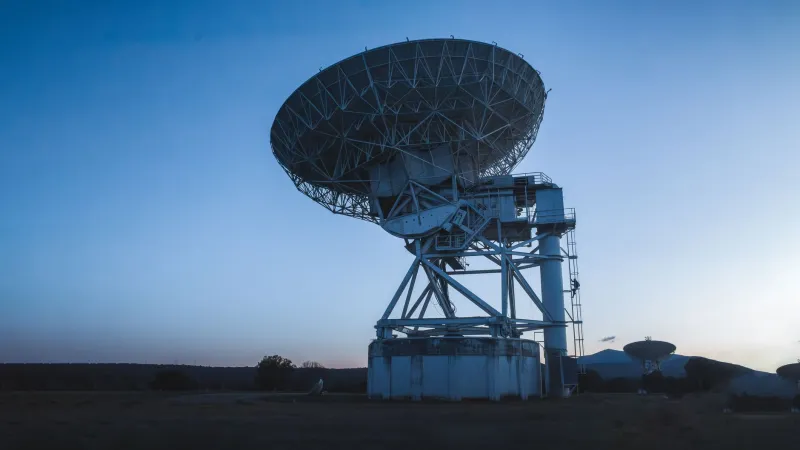
Some scientists have started arguing that this reframing is overdue. That SETI has always been, in part, a search for cosmic companionship — a project as much about human psychology as it is about radio telescopes and signal detection. And that until we're honest about that, we'll keep designing searches that are really just elaborate ways of looking for ourselves.
Purpose in an Indifferent Cosmos
So where does that leave us? If the universe is indifferent — not hostile, not welcoming, just indifferent — what does human purpose look like?
This is where the conversation gets interesting, because it splits pretty sharply. One camp argues that cosmic indifference is actually liberating. If the universe didn't assign us a role, we get to write our own. Meaning isn't handed down from the structure of reality — it's constructed, which makes it more ours, not less. Albert Camus was selling this idea back in the 1940s, and it's held up reasonably well.
The other camp finds that cold comfort. Because meaning that's entirely self-generated, with no external validation, no cosmic audience, no larger story to plug into — that's a meaning that has to be constantly rebuilt from scratch. It's exhausting in a way that inherited meaning isn't.
What's interesting is that this debate is no longer purely abstract. As AI systems become more sophisticated, as we develop better tools for modeling consciousness and its emergence, and as astrobiology pushes harder on the question of life's distribution across the galaxy, the philosophical stakes are getting scientific teeth. We're not just asking what does it mean to matter — we're building instruments that might actually tell us whether anything else out there is asking the same question.
The Quiet Reckoning
Maybe the most honest thing we can say right now is that we don't know. We don't know if consciousness is a cosmic inevitability or a one-time glitch. We don't know if the universe is full of minds quietly going about their business, or if ours is the only light on in an incomprehensibly large house.
But the way we sit with that uncertainty says a lot about us. The fact that we're asking the question at all — that we built radio telescopes and space probes and philosophical frameworks specifically to wrestle with our own possible irrelevance — might be the most distinctly human thing we do.
The universe might not know we're here. But we know we're here. And we keep looking outward anyway.
That's not nothing. It might even be everything.