Closer Together, Further Apart: The Cruel Irony of Technologies Built to Bring Us Together

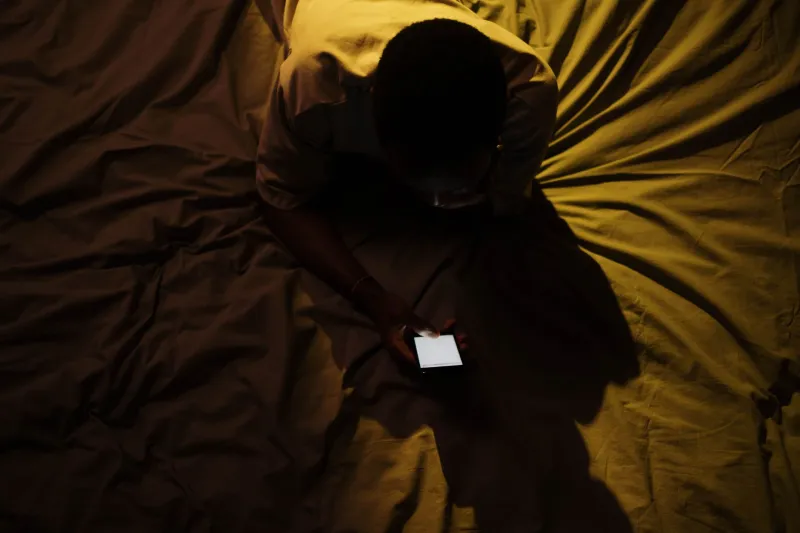
There's a particular kind of loneliness that hits hardest not in silence, but in the middle of a full notification tray. You're watching someone's vacation reel, reacting to a group chat, half-present in a video call — and somehow, underneath all of it, you feel completely alone. That sensation isn't a personal failing. It turns out, it might be a design flaw baked into the very systems we built to fix it.
The United States has been quietly grappling with what the Surgeon General officially labeled a loneliness epidemic back in 2023. Despite living in arguably the most connected era in human history — more devices, more platforms, more always-on communication than any generation before us — Americans are reporting fewer close friendships, less sense of belonging, and deeper feelings of social isolation than they did decades ago. The numbers are striking. According to Gallup data, the percentage of Americans who say they feel lonely "a lot" has climbed steadily even as smartphone ownership and social media use hit all-time highs. That's not a coincidence. That's a paradox worth pulling apart.
The Promise That Keeps Not Delivering
Every major communication technology of the last thirty years arrived with a version of the same pitch: we're going to bring people closer. The internet was supposed to dissolve geographic barriers. Social media was going to rebuild community in the digital age. Slack and Zoom were going to make remote work feel seamless and human. Even the metaverse — remember that pitch? — was sold as an immersive space where presence could finally be simulated at scale.
And in narrow, technical senses, all of those things worked. You can video call your college roommate who lives in Portland while you're sitting in your apartment in Charlotte. You can maintain a relationship with a cousin you'd otherwise see once a decade. The infrastructure of connection has never been more robust.
But infrastructure isn't the same thing as intimacy. And that distinction, which sounds obvious when you say it out loud, is apparently one we keep forgetting to build into our products.
What the Research Actually Says
Psychologists who study social bonding have been waving red flags about this for years. Dr. Julianne Holt-Lunstad at Brigham Young University, whose work helped push loneliness into public health conversations, has consistently argued that the quality of social connection matters enormously — not just the quantity or frequency of contact. Shallow interactions, even abundant ones, don't move the needle on loneliness. They might actually make it worse by creating the illusion of connection without delivering the substance.
There's also the comparison trap, which social media has essentially weaponized. Platforms optimized for engagement don't reward authentic vulnerability — they reward performance. So we watch curated versions of other people's lives, measure ourselves against highlight reels, and walk away feeling more disconnected from the human experience rather than less. The algorithm didn't set out to make you feel bad. It just had no incentive to make you feel genuinely seen.
Remote work tools have introduced their own flavor of the problem. Zoom fatigue is real and well-documented — the cognitive load of video calls, the absence of peripheral social cues, the way a Brady Bunch grid of faces somehow feels less human than a crowded conference room. We replaced hallway conversations and impromptu lunches with scheduled thirty-minute syncs, and then acted surprised when people started reporting that they missed their coworkers.
The Deeper Misunderstanding
Here's where it gets philosophically uncomfortable: maybe the problem isn't that these technologies failed at connection. Maybe the problem is that we fundamentally misread what connection requires in the first place.
Human bonding, at its core, is forged through shared vulnerability, physical presence, unscripted time, and the kind of low-stakes, repetitive proximity that builds trust gradually. It's built in the boring stretches — the commute you share, the meal that runs long, the moment someone sees you at your worst and sticks around anyway. None of those things translate cleanly to an app. They're inefficient by design. They resist optimization.
Tech, by contrast, is almost pathologically efficiency-minded. Every platform is built to maximize interactions per minute, reduce friction, scale across millions of users simultaneously. Those are the right instincts for logistics software. They're the wrong instincts for human intimacy. When you strip away the inefficiency, you strip away a lot of what makes connection feel real.
There's a space exploration analogy worth making here: we've built faster and faster ships, but we keep launching toward the wrong destination. More bandwidth doesn't get you to belonging. A smoother interface doesn't simulate the warmth of being physically present with someone you love. We've optimized the rocket and forgotten to ask where we actually want to go.
So What Now?
None of this means technology is the villain. It means we've been using it as a substitute for something it was never equipped to replace. The tools aren't worthless — they're genuinely useful for maintaining connections across distance and keeping relationships alive between the moments that really count. The mistake is treating them as the main event.
Some researchers and designers are starting to push back. There's growing interest in what's sometimes called "slow technology" — tools designed not to maximize engagement but to facilitate the conditions for genuine human interaction. Less notification engineering, more friction-by-design. Platforms that encourage you to put the phone down and actually show up somewhere. It's a small movement, but it's pointing in an interesting direction.
On a more personal level, the research keeps circling back to the same unsexy conclusion: in-person time, with people you actually care about, doing things that don't require a screen, is stubbornly irreplaceable. Not because nostalgia is a virtue, but because human neurology hasn't updated its firmware since the Stone Age. We're still wired for eye contact, shared meals, touch, and the thousand micro-signals that bodies exchange in the same room. No update is coming for that.
The loneliness epidemic isn't a tech problem with a tech solution. It's a human problem that we've been trying to solve with the wrong toolkit. The good news is we already know what the right toolkit looks like. The harder question is whether we're willing to put down the devices long enough to use it.