Nobody's Home: The Eerie Math Behind Why the Universe Might Be Empty (Except for Us)
Pull up any map of the observable universe and the sheer scale of the thing is almost offensive. Two trillion galaxies. Hundreds of billions of stars per galaxy. Planets orbiting a significant chunk of those stars. If even a tiny fraction of those worlds ever produced life — let alone spacefaring civilizations — our galaxy alone should be absolutely crawling with signals, probes, megastructures, something.
And yet: nothing. Static. The cosmic equivalent of knocking on a neighbor's door at 2 p.m. on a Saturday and getting no answer.
This is the Fermi Paradox, named after physicist Enrico Fermi who famously asked "Where is everybody?" over lunch in 1950. But framing it as a simple question undersells how deeply weird the silence actually is — and how much the scientific community's thinking about it has evolved in just the last decade.
The Drake Equation Got an Upgrade
For a long time, the go-to tool for estimating the likelihood of extraterrestrial civilizations was the Drake Equation, a formula stitched together in 1961 that multiplied a chain of probabilities — star formation rates, the fraction of stars with planets, the fraction of those planets capable of supporting life, and so on — to spit out an estimate of detectable civilizations in our galaxy.
The problem was that most of those variables were essentially guesses. Educated guesses, sure, but guesses.
Then the Kepler Space Telescope changed everything. Between 2009 and 2018, Kepler confirmed the existence of thousands of exoplanets and, more importantly, established that rocky planets in the so-called "habitable zone" around their stars are genuinely common. Recent data from the James Webb Space Telescope has gone further, allowing astronomers to analyze the atmospheric compositions of distant worlds with a precision that was pure science fiction a generation ago.
The emerging picture? The raw ingredients for life — liquid water, organic chemistry, stable stellar environments — aren't rare at all. Which makes the silence even louder.
The Great Filter: Past or Future?
One of the most compelling (and frankly terrifying) frameworks for understanding the Fermi Paradox is the Great Filter hypothesis, first articulated by economist Robin Hanson in 1998. The idea is straightforward: somewhere between dead chemistry and galaxy-spanning civilization, there's a step so brutally difficult that almost nothing makes it through.
Here's where it gets uncomfortable. Either the Great Filter is behind us — meaning the emergence of complex life, or eukaryotic cells, or multicellular organisms, or us, was the near-impossible step — or it's ahead of us. If the filter is behind us, we might genuinely be special, maybe even unique. If it's ahead of us, then civilizations routinely reach something like our current technological level and then... stop. By some mechanism. Every time.
The discovery of microbial life on Mars or Europa would actually be bad news under this framework. Because it would suggest that simple life isn't the hard part — which pushes the filter forward in time, toward us, toward whatever comes next.
Recent findings from JWST have added texture to this debate. Astronomers have identified several exoplanet candidates with atmospheric signatures that could indicate biological processes, though the science is still cautious and contested. Every new potentially life-friendly world discovered is simultaneously exciting and a quiet reminder that the silence from all of them is deafening.
Quantum Mechanics, Simulation Theory, and the Weirder Explanations
The conventional hypotheses — civilizations destroy themselves, interstellar travel is just too hard, everyone's hiding — are reasonable enough. But a growing number of researchers are reaching for stranger explanations.
Some physicists have proposed that quantum mechanics might play a role in biological complexity at a fundamental level, and that the conditions required for consciousness-producing life might be far more constrained than we assume. If certain quantum processes are genuinely necessary for biological cognition, the window for their emergence might be cosmically narrow.
Then there's simulation theory, which has migrated from philosophy departments into mainstream scientific conversation largely because of figures like Nick Bostrom and, more publicly, Elon Musk. If we exist inside a computational simulation, the absence of alien civilizations has a clean explanation: the simulation isn't running them. We're the experiment, not the universe.
It sounds like science fiction — and it is, until you try to definitively argue against it. The unsettling part isn't that simulation theory is necessarily correct. It's that we currently have no falsifiable test to rule it out.
A more grounded but still radical idea comes from the "Dark Forest" hypothesis, popularized by Chinese science fiction author Liu Cixin. The premise: the universe is full of civilizations, but everyone is hiding, because revealing your location to an unknown technological power is an existential gamble no rational species is willing to take. Under this model, broadcasting our presence — which we've been doing with radio waves since the early 20th century — is either already too late or hasn't yet reached the ears of anything that would care.
What SETI Is Actually Listening For Now
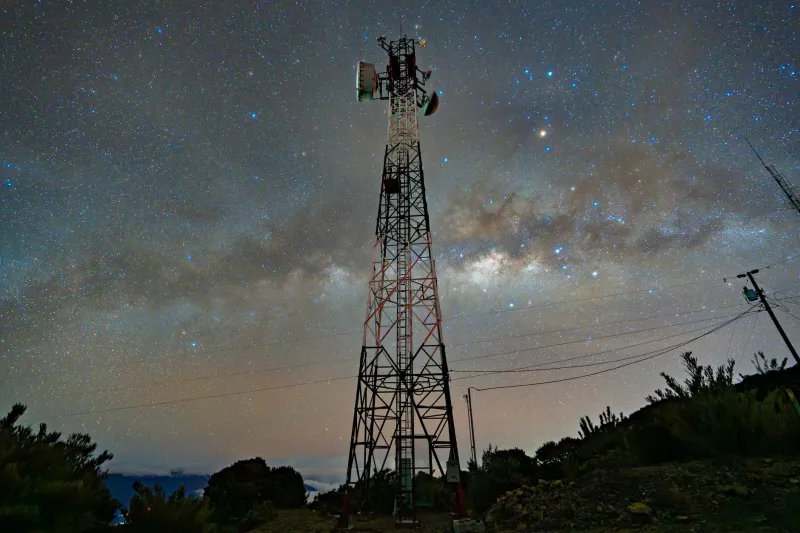
The Search for Extraterrestrial Intelligence has traditionally focused on radio signals, particularly in the frequency range around 1.42 GHz — the "hydrogen line" — on the theory that any technologically advanced civilization would recognize this as a natural cosmic signpost. But modern SETI research has broadened dramatically.
Researchers are now scanning for laser pulses, looking for the waste heat signatures of Dyson spheres (hypothetical megastructures that harvest a star's entire energy output), and analyzing the light curves of stars for signs of artificially constructed objects. The Breakthrough Listen initiative, backed by a $100 million investment from Russian-Israeli billionaire Yuri Milner, has been systematically scanning millions of star systems using the world's most powerful telescopes.
So far: nothing confirmed. A handful of intriguing anomalies, a few candidate signals that faded before they could be verified, and the BLC1 signal from Proxima Centauri in 2020 that briefly caused genuine excitement before being attributed to terrestrial radio frequency interference.
What the Silence Is Actually Saying
Here's the thing about the Fermi Paradox that rarely gets acknowledged in popular coverage: the silence isn't necessarily bad news. It might be the most important data point in human history, and we're still not sure how to read it.
If we're alone — or among the first — then the moral weight of what we do next becomes almost incomprehensible. Every decision about climate, about AI, about whether to go to Mars, about how we treat each other, carries a significance that extends beyond our species and our moment. We might be the universe's one shot at producing something that can understand it and carry it forward.
If we're not alone but simply early, the same logic applies. We're in a position that no civilization before us has been in — at the beginning of the cosmic conversation, with the first words still unspoken.
And if the Great Filter is ahead of us? Then the most urgent question in human history isn't about extraterrestrial life at all. It's about what we're going to do differently.
The silence isn't an absence of meaning. It might be the loudest thing the universe has ever said.