Moon Rush: How Private Companies Are Quietly Staking Claims Before the Rule Book Is Written
Somewhere between Elon Musk's latest late-night post and Jeff Bezos's next press release, a quieter story is unfolding — one with stakes that dwarf anything happening in terrestrial boardrooms. Private companies are gearing up to plant commercial infrastructure on the moon, and they're doing it at a speed that has international law scrambling to catch up. This isn't science fiction. The hardware is being built right now, the launch windows are being scheduled, and the question of who gets to benefit from the moon's resources is very much still up for grabs.
The Starting Gun Nobody Officially Fired
There was no ceremony. No handshake between world leaders. But make no mistake — the commercial lunar land rush is already underway.
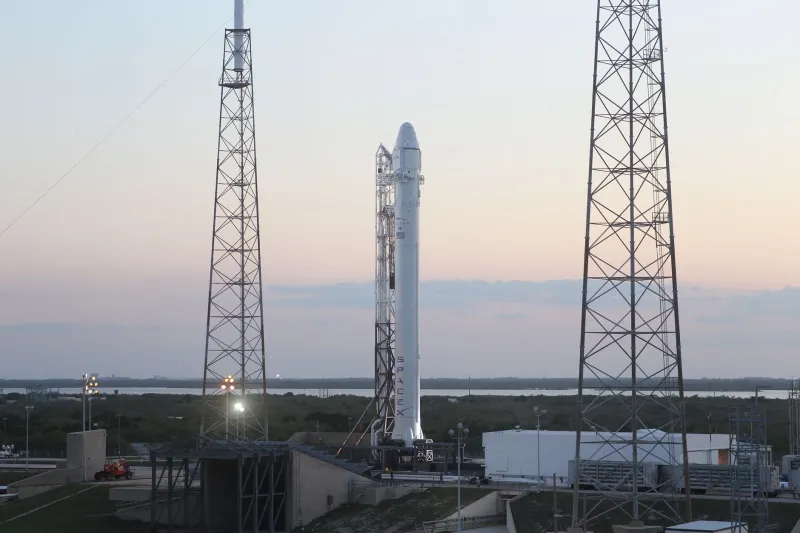
SpaceX has its eyes on the moon as a waypoint to Mars, but the infrastructure required to support that vision — fuel depots, landing pads, communications relays — would constitute the most significant permanent human footprint on another world since the Apollo program. Blue Origin, through its Blue Moon lander program, has been pitching NASA and private clients alike on the idea of routine lunar cargo delivery. And then there are the smaller players: companies like Astrobotic, Intuitive Machines, and ispace (a Japanese startup with serious US investment backing) that are actively competing for contracts to deliver payloads to the lunar surface.
What makes this moment genuinely different from previous space races is the motivation. Governments went to the moon for prestige and geopolitical leverage. These companies are going for business reasons — and that changes everything about how they're approaching the question of presence, permanence, and ownership.
The Legal Gray Zone Is Enormous
Here's where it gets complicated. The 1967 Outer Space Treaty — the closest thing humanity has to a constitution for space — explicitly states that no nation can claim sovereignty over the moon or any other celestial body. What it doesn't say, at least not clearly, is whether private companies can extract and sell resources found there.
The United States took a swing at clarifying this in 2015 with the Commercial Space Launch Competitiveness Act, which granted American citizens the right to own resources they extract from space. The Artemis Accords, a more recent US-led international agreement, nudged the conversation further by endorsing the concept of "safety zones" around lunar operations — essentially buffer areas that other parties would be expected to respect.
But neither of these frameworks constitutes a comprehensive property rights regime. Legal scholars are genuinely divided on whether resource extraction crosses the line into de facto territorial claim. And with China and Russia conspicuously absent from the Artemis Accords, there's no unified global consensus on the rules.
What this means in practice is that the first company to establish a functioning extraction or processing operation on the moon may find itself operating in a legal environment that simply wasn't designed for what it's doing.
The Economic Pull Is Undeniable
So why are these companies charging ahead anyway? Because the numbers, if they pan out, are staggering.
The moon's south pole is believed to hold significant deposits of water ice — and water, in space, is essentially rocket fuel. Splitting water into hydrogen and oxygen gives you the basic ingredients for propellant. A lunar refueling depot could dramatically reduce the cost of deep-space missions by eliminating the need to haul all that fuel up from Earth's gravity well. Some analysts estimate that lunar-derived propellant could eventually cut the cost of Mars missions by billions of dollars.
Beyond water, the moon contains helium-3, rare earth elements, and other materials with potential value back on Earth or in future space-based industries. The total economic value of lunar resources has been estimated in the quadrillions — a number so large it almost stops meaning anything, but one that clearly motivates serious investment.
For American startups, there's also the more immediate incentive of NASA contracts. The agency's Commercial Lunar Payload Services (CLPS) program has already awarded hundreds of millions in contracts to private companies to deliver scientific instruments to the moon. This creates a feedback loop: government money de-risks the early missions, companies build capability and credibility, and eventually the business case for purely commercial lunar operations becomes viable.
What Happens When the Claims Conflict?
Imagine two companies — or two nations — both wanting to set up operations near the same water-ice deposit at the lunar south pole. Right now, there's no mechanism to resolve that dispute. No lunar court. No international authority with enforcement power. Just competing interests and the hope that everyone plays nice.
This isn't a hypothetical. China has announced its own lunar ambitions, including a proposed International Lunar Research Station near the south pole, with a target timeline that overlaps with NASA's Artemis program. The geographic convergence of these missions on the same resource-rich region of the moon is not accidental, and the potential for friction is real.
Some space policy experts argue that the solution is a new international treaty — a kind of Law of the Sea for the moon, establishing shared governance over lunar resources. Others contend that the existing framework, imperfect as it is, provides enough flexibility to accommodate commercial activity without triggering conflict. And a small but vocal contingent believes that private property rights on the moon are not just legally defensible but actually desirable, as a way to incentivize the investment needed to develop lunar resources responsibly.
The Civilization-Scale Question
Zoom out far enough and this isn't really a story about SpaceX or Blue Origin. It's a story about whether humanity, as a species, will approach the resources of the solar system as a shared inheritance or as something to be claimed and exploited by whoever gets there first.
The private companies driving this race aren't villains. Many of the engineers and entrepreneurs involved genuinely believe they're advancing humanity's long-term future. And the commercial model has real advantages — it's faster, more iterative, and less bureaucratically constrained than government-led programs.
But speed has a cost. The treaties and norms that govern behavior in space were written in a different era, for a different kind of spacefaring. The window to establish a fair, durable framework for lunar resource governance is closing — and right now, the companies building the infrastructure are moving considerably faster than the diplomats writing the rules.
The moon isn't going anywhere. But our chance to decide, collectively and deliberately, how humanity will relate to it? That window might be shorter than we think.