Built to Last, Built to Break: The Hidden Fragility Inside the Reusable Rocket Revolution
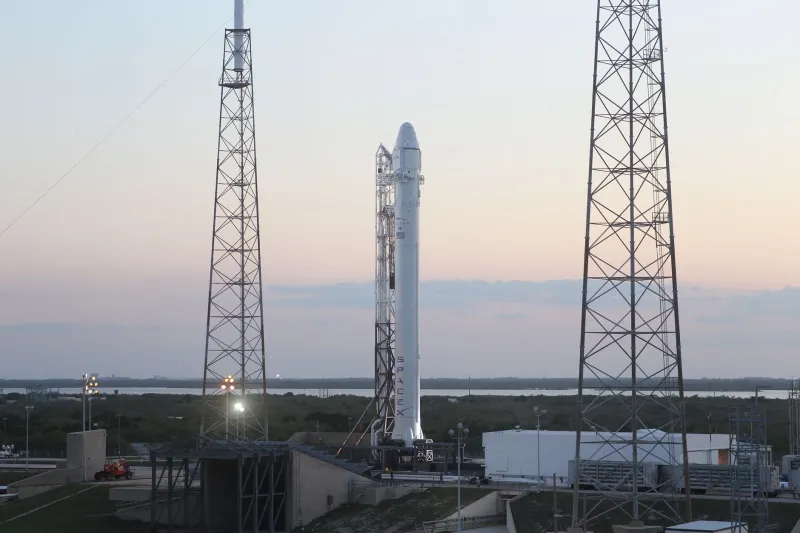
Let me be upfront about something: I think reusable rockets are incredible. Watching a Falcon 9 booster stick a landing — legs deploying, engines firing in a precise choreography of controlled physics — still gives me a genuine jolt of excitement, even after dozens of times. The engineering involved is legitimately extraordinary, and the people who built it deserve every bit of recognition they get.
But excitement and critical thinking aren't mutually exclusive. And the more I look at where the commercial spaceflight industry is heading, the more I think we're accumulating a set of risks that we're not talking about honestly enough.
The Miracle We've Normalized
Reusability changed everything about the economics of getting to orbit. Before SpaceX proved the concept, every rocket was essentially a very expensive piece of hardware you threw away after one use. The cost to launch a kilogram to low Earth orbit was measured in tens of thousands of dollars. Now, with a reusable booster that's flown a dozen times or more, that cost has dropped dramatically — and it's still falling.
This is genuinely transformative. Cheaper access to space means more satellites, more science, more commercial activity, and — eventually — more humans living and working beyond Earth. The trajectory is exciting. The momentum is real.
But here's the thing about momentum: it can carry you somewhere you didn't intend to go.
Concentration Risk Is a Real Thing
Right now, in the United States, a significant portion of commercial and government launch capacity runs through a very small number of systems operated by a very small number of companies. SpaceX's Falcon 9 has become so dominant that NASA, the Department of Defense, and commercial satellite operators have all built significant dependency on its continued operation.
This is not a knock on SpaceX. Their reliability record is genuinely impressive. But reliability isn't the same as resilience, and those two concepts are often confused in public conversation about spaceflight.
Resilience is about what happens when the system fails. And any system — no matter how well-designed, no matter how rigorously tested — can fail. The question we should be asking isn't "what are the odds of a catastrophic failure?" It's "what happens to our broader space program, our satellite infrastructure, and our national security posture if one does occur?"
The answer, depending on the scenario, ranges from "pretty bad" to "genuinely alarming."
The Societal Weight of a Single Catastrophe
Apollo 1 killed three astronauts on a launchpad in 1967. The Challenger disaster in 1986 killed seven and grounded the shuttle program for nearly three years. Columbia in 2003 killed seven more and triggered another two-year stand-down. Each of these tragedies reshaped NASA's culture, budget, and risk tolerance for years afterward.
Now imagine a catastrophic failure — not just a mission loss, but something that kills a crew, causes significant collateral damage, or triggers a chain reaction of regulatory responses — in an era where one company handles a substantial fraction of global orbital launch capacity. The ripple effects wouldn't be limited to that company's operations. They'd cascade through insurance markets, regulatory agencies, international launch agreements, and public trust in the entire commercial spaceflight enterprise.
We haven't really modeled what that looks like. We haven't built the institutional frameworks to manage it. And the pace at which the industry is scaling means the exposure is growing faster than our ability to understand it.
The Billionaire Problem
There's an uncomfortable conversation lurking beneath the surface of commercial spaceflight, and it has to do with who's actually in charge.
The current generation of launch capability was largely built by individuals — Elon Musk, Jeff Bezos, and a handful of others — whose personal vision, personal wealth, and personal decision-making have been central to their companies' trajectories. This model has produced remarkable results. It has also created a situation where critical infrastructure for the 21st-century economy and beyond is tied, in ways that are hard to fully untangle, to the preferences and priorities of a very small number of people.
What happens to Starship's development roadmap if Musk's attention shifts? What happens to Blue Origin's lunar ambitions if Bezos decides the return on investment isn't there? These aren't rhetorical questions designed to be alarmist — they're genuine strategic uncertainties that governments and commercial operators are quietly grappling with.
The US has, historically, been pretty good at not letting critical infrastructure become a single point of failure. We have redundancy baked into power grids, communications networks, and financial systems — imperfectly, but intentionally. We haven't applied that same logic to space access, and the window to do so before the dependencies become truly locked in is narrowing.
Moving Fast and Breaking... What, Exactly?
The Silicon Valley ethos of "move fast and break things" has a specific meaning in software: ship early, learn from failures, iterate. The cost of a bug in an app is a bad user experience and a patch. The cost of a bug in a crewed spacecraft is measured differently.
The commercial spaceflight industry has, to its enormous credit, internalized a lot of aerospace safety culture. SpaceX's engineering rigor is real. But the pressure to iterate quickly, to hit launch windows, to satisfy customer contracts and investor expectations — that pressure is also real, and it exists in tension with the kind of slow, methodical risk assessment that spaceflight arguably demands.
This isn't a prediction of disaster. It's an observation about the structural conditions that tend to precede disasters in complex systems.
The Excitement Is Earned — So Is the Skepticism
None of this is an argument for slowing down. The case for becoming a spacefaring civilization is compelling, the technology is genuinely advancing, and the people driving this industry are, by and large, motivated by something more than profit.
But the biggest ships in history — literal and metaphorical — have always carried the seeds of their own catastrophic potential. The Titanic was a marvel of engineering until it wasn't. The financial instruments that caused the 2008 crisis were considered elegant solutions until they cascaded into something no one had fully modeled.
We're building something unprecedented in commercial spaceflight. The honest, grown-up thing to do is to be excited about it and worried about it at the same time — and to make sure the people making the critical decisions are doing both.
Because the last thing we want, after all this work to get off the ground, is to discover that we built our greatest achievement on a foundation nobody bothered to stress-test.