From the Page to the Lab: 8 Sci-Fi Staples Ranked by How Close We Actually Are

The Gap Between Imagination and Engineering
There's a peculiar joy in watching science fiction age. Some of it curdles into embarrassing datedness — flying cars by 1999, anyone? But occasionally, a story written decades ago turns out to be a remarkably accurate blueprint for where we actually end up. The trick is knowing the difference between a prediction and a fantasy.
So let's do a real accounting. No breathless hype, no doomer pessimism. Just an honest look at which beloved sci-fi concepts are quietly crossing the threshold from imagination into the physical world — and which ones are running into the kind of fundamental barriers that don't yield to more funding or faster processors.
The Ones That Are Actually Happening
1. Brain-Computer Interfaces
This one felt squarely in the realm of cyberpunk novels as recently as 15 years ago. Today, Neuralink has implanted its device in human patients, with early results showing paralyzed individuals controlling computer cursors through thought alone. Synchron, a less-publicized competitor, has been conducting human trials even longer.
The interface is still clunky by the standards of, say, The Matrix or Ghost in the Shell — we're talking about a limited bandwidth connection that requires surgery and degrades over time. But the direction of travel is undeniable. Within a decade, high-bandwidth neural interfaces that meaningfully augment human cognitive and physical capability are a serious engineering target, not a thought experiment.
Sci-fi predicted it. The lab is delivering it.
2. Autonomous Delivery Drones
Amazon Prime Air has been conducting residential deliveries in Lockeford, California and College Station, Texas. Wing, owned by Alphabet, is actively delivering packages and burritos in suburban Virginia. Zipline has been delivering medical supplies by drone across Rwanda and Ghana for years, and is now expanding aggressively in the U.S.
This one has cleared the prototype stage. It's in the messy, regulatory-friction-filled deployment phase, which is honestly the most boring and most important part of any technology's journey from fiction to fact. Drone delivery is happening. It's just happening slower than the press releases suggested.
3. Fusion Energy (Finally, Seriously)
For most of living memory, fusion power has been the ultimate 'always 30 years away' joke. It's not funny anymore — or rather, the punchline has changed. In December 2022, the National Ignition Facility at Lawrence Livermore National Laboratory achieved ignition for the first time: more energy out than laser energy in. It's a narrow definition of 'gain,' but it's a real milestone.
Private companies like Commonwealth Fusion Systems, TAE Technologies, and Helion Energy are raising serious money and publishing credible timelines for demonstration reactors in the early 2030s. Fusion isn't here yet, but for the first time it's legitimately on the near-term roadmap rather than perpetually stranded on the horizon.
4. Reusable Rockets and Routine Commercial Spaceflight
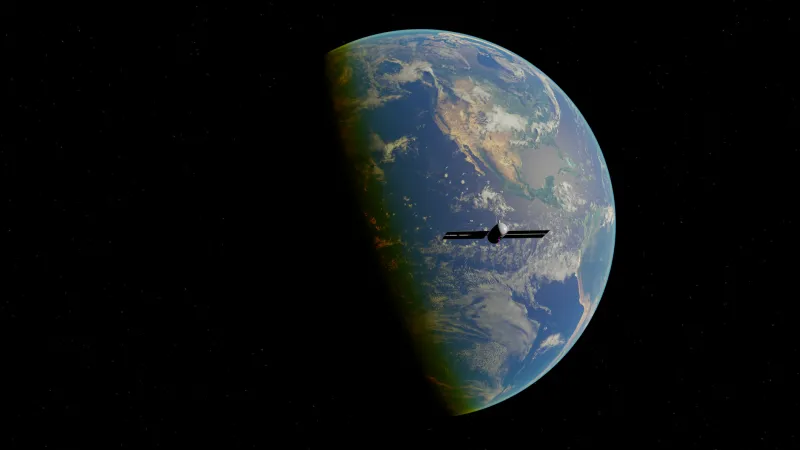
Honestly, this one already happened, and we've somehow normalized it. SpaceX's Falcon 9 has landed its first-stage booster over 200 times. Crew Dragon has ferried astronauts to and from the International Space Station on multiple occasions. Civilian passengers have reached orbit. This is the future that science fiction imagined, and it arrived quietly enough that a lot of people missed the moment.
The big spaceship dream — routine, affordable access to orbit — is no longer speculative. It's operational infrastructure.
5. Personalized AI Assistants
Not AGI (we'll get to that), but the narrow, context-aware AI systems that can hold conversations, generate creative work, summarize complex documents, and assist with coding are genuinely new. ChatGPT, Claude, Gemini — these tools would have read as advanced science fiction to anyone in 2010. They're imperfect, occasionally confidently wrong, and prone to strange failure modes. But they're also genuinely useful in ways that represent a qualitative shift from prior technology generations.
Sci-fi imagined helpful AI companions. We have a rough, sometimes frustrating version of that. It counts.
The Ones That Aren't Coming Anytime Soon
6. Warp Drives
Let's be direct: warp drives require either exotic matter with negative energy density — which we have no evidence exists — or a manipulation of spacetime geometry that demands energy scales orders of magnitude beyond anything physically plausible with known physics. The famous Alcubierre metric is mathematically elegant and physically inert. Various researchers have proposed refinements that reduce the theoretical energy requirements, but 'reduced from galaxy-mass energy to merely star-mass energy' is not a meaningful improvement.
This one isn't a 30-years-away problem. It's a 'we'd need to rewrite fundamental physics' problem. That might happen! But banking on it is a different kind of optimism than believing in fusion power.
7. True Artificial General Intelligence
Current large language models are impressive pattern-matching and synthesis engines. They are not reasoning systems in any philosophically rigorous sense, and the gap between 'very good autocomplete' and 'genuine general intelligence' may be much wider than the current hype cycle suggests.
The core problem is that we don't actually have a scientific theory of what intelligence is — not the kind that would let engineers build toward it deliberately. We're making increasingly powerful tools that simulate aspects of intelligence. Whether scaling those tools eventually produces something genuinely general remains one of the most contested questions in all of computer science. Betting on a specific timeline is hubris.
8. Teleportation (Of People)
Quantum teleportation is real — it's been demonstrated with particles and even small molecules. But it teleports quantum states, not matter. Reconstructing a human being from a quantum state readout would require storing and transmitting information on a scale that exceeds the total computational capacity of every computer on Earth by an incomprehensible margin. And there's the philosophical problem: is the person who arrives the same person who left, or a copy?
This one lives comfortably in the 'great story device, terrible engineering proposal' category.
The Scorecard
The pattern that emerges from this exercise is pretty interesting. The sci-fi concepts that are actually becoming real tend to be ones that work with known physics and scale along engineering curves we understand. The ones that remain stubbornly fictional tend to require either unknown physics or a leap in fundamental understanding that we can't currently see a path toward.
That's not a reason to stop dreaming big. Science fiction's job isn't to be a literal technical manual — it's to expand the horizon of what feels possible. But it's worth knowing which horizon is a destination and which one keeps receding as you walk toward it.